.jpg)
Portfolio Review and Interview
As part of my third year at university, I'll have to attend a formal interview and a portfolio review in March. It will take around 20 to 30 minutes and there will be two external professionals and two members of academic staff for assessment purposes there to conduct the interview. The interviews are being held between the 2nd and the 20th of March, with individual slots being confirmed nearer the time. In order to be prepared for this interview, I will need to create a body of work stemming from my third-year studies that indicate my interest within the field as well as including my knowledge of the subject and my understanding of the path to my intended future career. I also intend to do some research on my interviewer(s) so that I also, can ask them relevant questions, mention some of their work and have an in-depth conversation that will hopefully be two-sided and genuine, almost as if I were to treat it like a job interview.
The Impact of Covid-19 on University Studies
I was assigned the day of Thursday, March 19th at 12 pm for my interview. It was to be held with Cian and Jeremy, two lecturers from the university, and photographers Stephanie Wynne and Steve McCoy. After preparing my portfolio for print and worrying about layouts and sizes, we received the news on March 17th that the university would be closing a week sooner for the Easter break due to Covid-19. All face to face teaching was to be postponed and so all students due to have their interviews on Wednesday 18th and Thursday 19th were told they would receive an email with the re-arrangements. The new date for my interview was confirmed as Wednesday, April 22nd at the same time of 12 pm. The portfolio now obviously needed to be in the form of a PowerPoint or PDF document ready to send over via Microsoft Teams teams that morning.
Portfolio Preparation
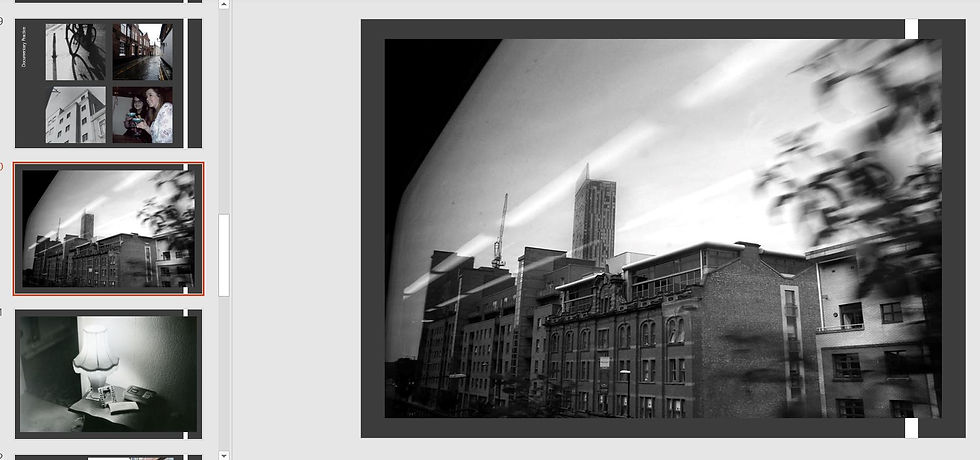
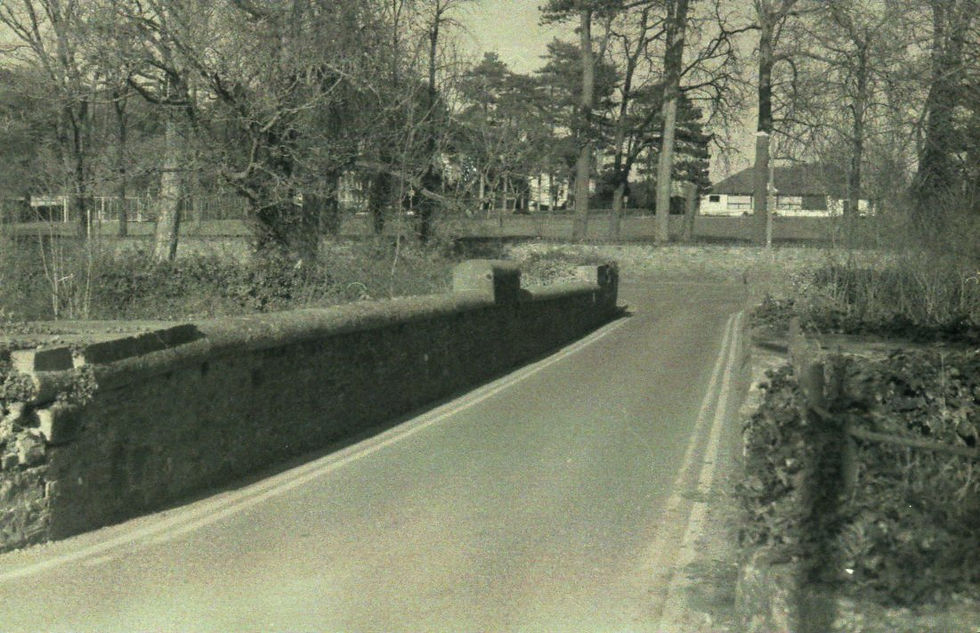
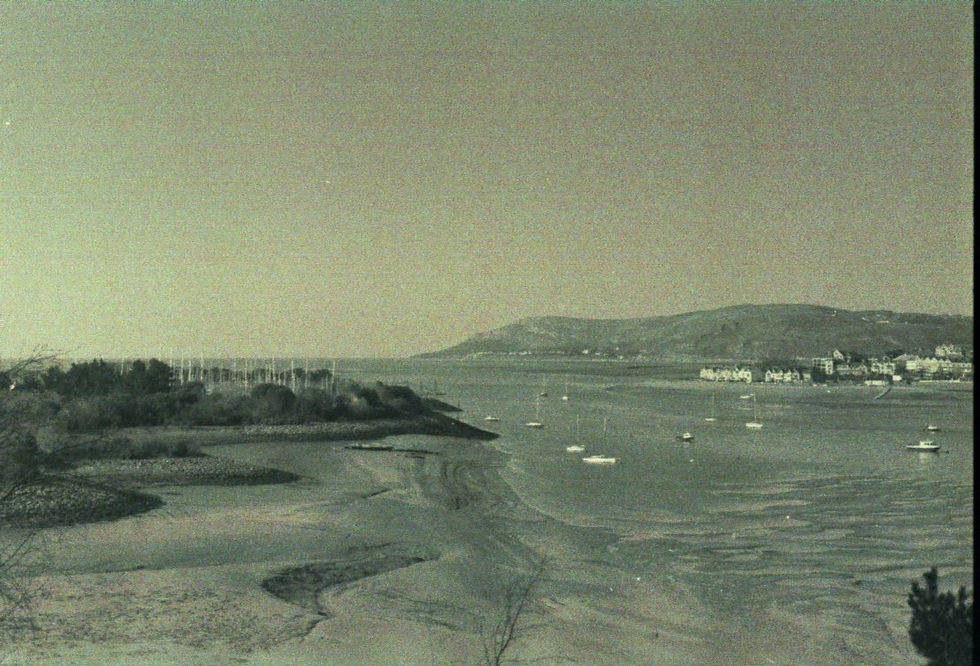
All the images I had originally planned to show in the interview, I placed in a PowerPoint presentation in the same layout that I had prepared them physically. Originally, I would have taken in an A3 portfolio, making the smallest image I had to show, A5 size, as it shared a page with 3 other images of the same size, the rest of my images being roughly A5 to A4, some even A3. The only differences now between the physical and digital portfolios were this, but secondly, the fact that the photographers going through my work could only view them on a screen one page at a time and not be able to place different images next to each other on a table, side by side. This would have been useful for my most recent work because they are not intended to be beautiful stand-alone images, but rather a body of documentary work that comes together to represent one idea. What I had to do to overcome this problem was place some images two per slide, ones that I would have placed together on the table, thus making them smaller. I realised that this was a risk that may possibly work against me but it was a risk I was willing to take to help get across the point that they were not stand-alone images. I just felt as though my recent documentary pieces are more powerful as a set and that as long as I explained this, the narrative of the project, reason behind the groupings, and that this was why there were two or more images on some pages then it would be allright. There are 32 images in this PowerPoint which is a bit higher than I was aiming for, which was 25, but again, this is down to coupling various images and making sure there were enough images in each of the categories I had organised the images into. These categories were 'Live Brief' both pre and post interim exhibition, 'Documentary', 'Street Seen', 'Portraits', and finally 'Collaborations'. The images I chose to include can be seen in the gallery below.










Interview Preparation
Once I was emailed the new interview date, I began working on a few things I imagined I would try and work into the conversation. I don't have any experience with Microsoft Teams so I wasn't sure if we would be sharing screens, or even how to do that, or whether or not we would be going through the PowerPoint from the interviewers' point of view at their pace, or whether they would have gone through the PowerPoint beforehand, considering I had sent the document over before we started. I anticipated that Steve and Stephanie would ask questions as we went through the images so I prepared a word document with details of what was on each slide so that I could make sure to remember and get in the main talking points regarding the images we were seeing at the time. The notes went as follows;
Slide 1 – Title Page w/ logo
Slides 2, 3, 4 – Pre-Interim Exhibition images. Aims to experiment with colour film and film types in order to try and achieve the older style, aged aesthetic in photographs. Marrying together the old and the new as the exhibition itself gave a nod to my family archive from the same period and where the inspiration and love for aged/vernacular images came from.
Slides 5, 6, 7 – Post Interim Exhibition. Aims to experiment further, now with processing and printing methods too so the images not only look aged in photographic content but also now in style and physical appearance of the print. Covid-19 benefits the project here as it has cleared the streets of tourists, cars, and commercial travel making not only the concept and style of my images similar to my family archive but now also the content of the images too.
Slides 8, 9, 10, 11 – These are images from my previous documentary work all taken during previous years of my degree. Slide 8 and the right-hand side of 9’s images were both taken on a digital camera during my first year of university before my focus later upon analog practices in my second and third years.
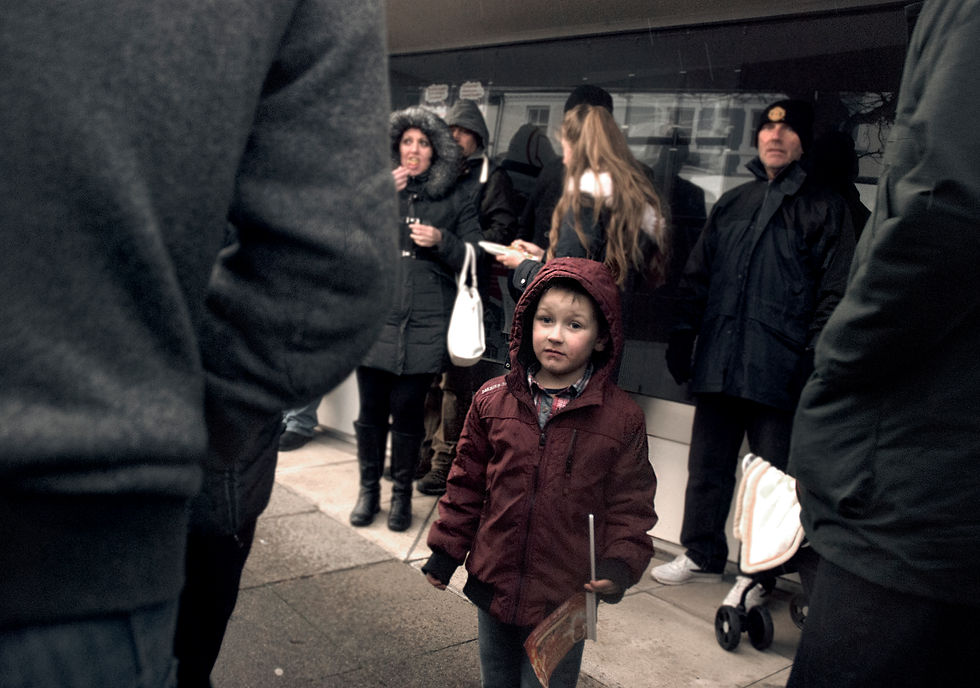
Slides 12, 13 – These images are from ‘Street Seen’ the book I published with Blurb back in 2016. During college, I was just beginning to explore my love for street photography, and for my final exhibition piece, I put together a book of all of these images I had collected during my final year of college. The unique process I adapted while shooting for this book was to attend every possible event I could from September 2015 to February 2016 (when the book was published) and use the ‘shoot from the hip’ method at the rate of about 20 images every 10 minutes. Aside from going out whenever I could, I also attended the Manchester UCAS convention three times, a college trip to Bangor University, 3 separate Christmas markets, a lantern parade, and 3 fairs. The one particular image at the bottom of slide 11 made it onto the cover of the book due to the images resemblance of Cartier-Bresson’s ‘boy’ carrying bottles of wine.
Slide 14 – Some portrait work from previous years at university. These were both final images in my second year and taken on digital cameras.
Slide 15 - An image from my work with the Conwy Camera Club on the left and one from a shoot with children’s book author Heather Dyer on the right. My boss is part of the Conwy Camera Club and invites me to meetings and shoots occasionally whenever I am in town. The club also gives talks every Tuesday night regarding things like local photographic archives, exhibitions, workshops and often has visiting photographers to give talks about their practice.
I was recommended to Heather Dyer by a friend as she was looking for someone to take some photos for her latest book, which was to be sold in Canada. This was done back in 2016 and was the first time I had come across model release forms and copyright disclaimers and so on. It was also the very first time I had worked with a model for a professional reason.
Slides 16, 17 – During my A-Levels I discovered that there was actually a large market for these kinds of landscape images in local tourist shops in my hometown and decided that I could try and sell them as mounted prints and postcards in local shops. The shoot with Heather Dyer was yet to come which makes this the first business dealings I had ever had, at the age of just 17.
I thought that to have been working professionally on commission at just 17 was a big talking point so I wanted to get my figures right incase I was asked about them. This is something I have been doing since college, continued doing in the early years of my degree, and something I would love to continue doing after university on the sidelines. The shop I was working for was called the Conwy Craft Shop, at a rate of 20% commission per print sold. Each print was sold for £20+ depending on its size and cost around £4.50 to make, leaving me with an after commission profit of £11.50. The profit from just one print then allowed me to make 2 more, and when they both sold, I could make four more and so on.

Steve McCoy and Stephanie Wynne are North West based, commercial photographers who work primarily on-location shoots for various clients and companies and occasionally on their own collaborative projects. Their work can be seen to feature architecture, people, interiors and landscapes. They both have a background in higher education and documentary and architectural photography which is quite relevant to my own practice, if not future career path too.


Outcome of the Interview
Considering how much effort I put into the preparation of this interview, everything I was planning to say, and after including in the portfolio what I thought was some of my best, and most mentionable work, the interview completely took me by surprise to say the least. My overall grade was 52% (a 2:2), which is my lowest mark to date, which hurts me to say, especially when I need a minimum of a 2:1 overall to get onto the MA courses I have applied for. I'm hoping that my lecturers, Cian specifically, will know me well enough to know that I don't take 2:2's lightly at all. I've been averaging a solid 2:1 since my first year at university, with one third of my grades being 1st's.
Admittedly, looking back, I could have substituted some of my older work for more current images, which would have helped me explain better where my project was heading. I think there were opportunities for me to explain my current project's ambitions better and more images would have helped with this but other than that, I think I did all I could in the situation. I'm trying my best to see where the interviewers were coming from with their comments but I have to disagree with most of them. I have to be honest and say that the tone of the whole interview made me feel horrible. Without going on too much, Steve and Stephanie seemed confused as to why I had included so many different types of work in this portfolio e.g. portraits, landscapes, documentary. I explained that some portraits were from my years at university and therefore relevant, and the landscapes were part of my commissioned work outside of university, which we were told to include. We were told that we would need to show interest in the field outside of our degree work and what we were working on in our spare time, in my case, this was the landscapes and remaining portraits I'd shown. I felt really deflated by the fact that achievements such as working on commission at just 17 for both a famous author and a local tourist shop were not talked about, like they weren't important in my career thus far.
In terms of my current project, I cannot disagree with Cian and Jeremy's feedback as they are only reporting on how they think it went. I agree it went badly. But I found it unfair that such a large portion of my feedback seemed to have been influenced by Steve and Stephanie's views. As I mentioned, I could have included more recent work to better show the direction of the project but at the end of the day, its documentary work. It is purely subjective, it is an art form and all art forms and their outcomes are open to personal interpretation by the viewer. These interpretations by Steve and Stephanie, good or bad, I don't think should have affected my feedback as much as they did. I stand by the narrative that I have created for this project and believe it to be simple, interesting, and clear. In short, my narrative is to prove that film photography is still relevant and interesting. I aim, in this project, to create images, through the use of chemical experimentation and various print methods, that look as if they have been plucked straight out of an archive, decades old. In my interim exhibition, I created a body of work full of old and new images that challenged viewers to decipher between the two. The evolution of this project is obvious. The creation of these physically old-looking images was my main focus in terms two and three, however, with the impact of Covid-19 clearing the streets, my images now look old, not just in physical print but in the content of the images too as the streets are much emptier and commercial travel is no longer a thing. I was taken aback when I mentioned the traffic being similar to that of something like the '70s and Stephanie mentioned that actually, it was more like the '50s if I had seen the news reports. That fact seemed to colour the remainder of the conversation and I feel as though it was used to undermine and pick apart my narrative. It completely threw me and thus made the conversation hard to recover. Why I said '70s was because I had been working, in the interim exhibition with my family archive, predominantly created in the '70s. The simple point I was meaning to explain was that judging by the streets in my images, you would not know it was taken in the 21st century. I was asked how I was going to continue working with film without the use of Kingsway, in which I explained I had built a darkroom at home and invested in a film scanner, another big achievement very few people would bother to do. Unfortunately, another part of my practice I think is relevant but drew no response.
Overall, I think I presented a good portfolio of my best work from the past, my work since and outside of the university, and my current project. Unfortunately, I feel as though my past achievements have been deemed unimportant and irrelevant to the interview. I was simply aiming to prove myself as a well-rounded photographer with ambition, a love for the field outside of uni and of more than one genre too, something I would expect to have to prove in any other interview. Everything I am working on currently seems to have been misinterpreted due to a narrative that was picked apart by a technicality of dates, dates that I was not intending to referencing in the interview nor in my images. Personally, documentary photography is an art form, all outcomes are purely subjective and up to the viewer to form their own thoughts, so if your opinion is that the narrative or image doesn't make sense, then that doesn't mean it's wrong or meaningless. It took me a long time to regain confidence in this project following this interview and sadly, I know of a few people who agree with everything said here and felt that their interviews went the same way.